
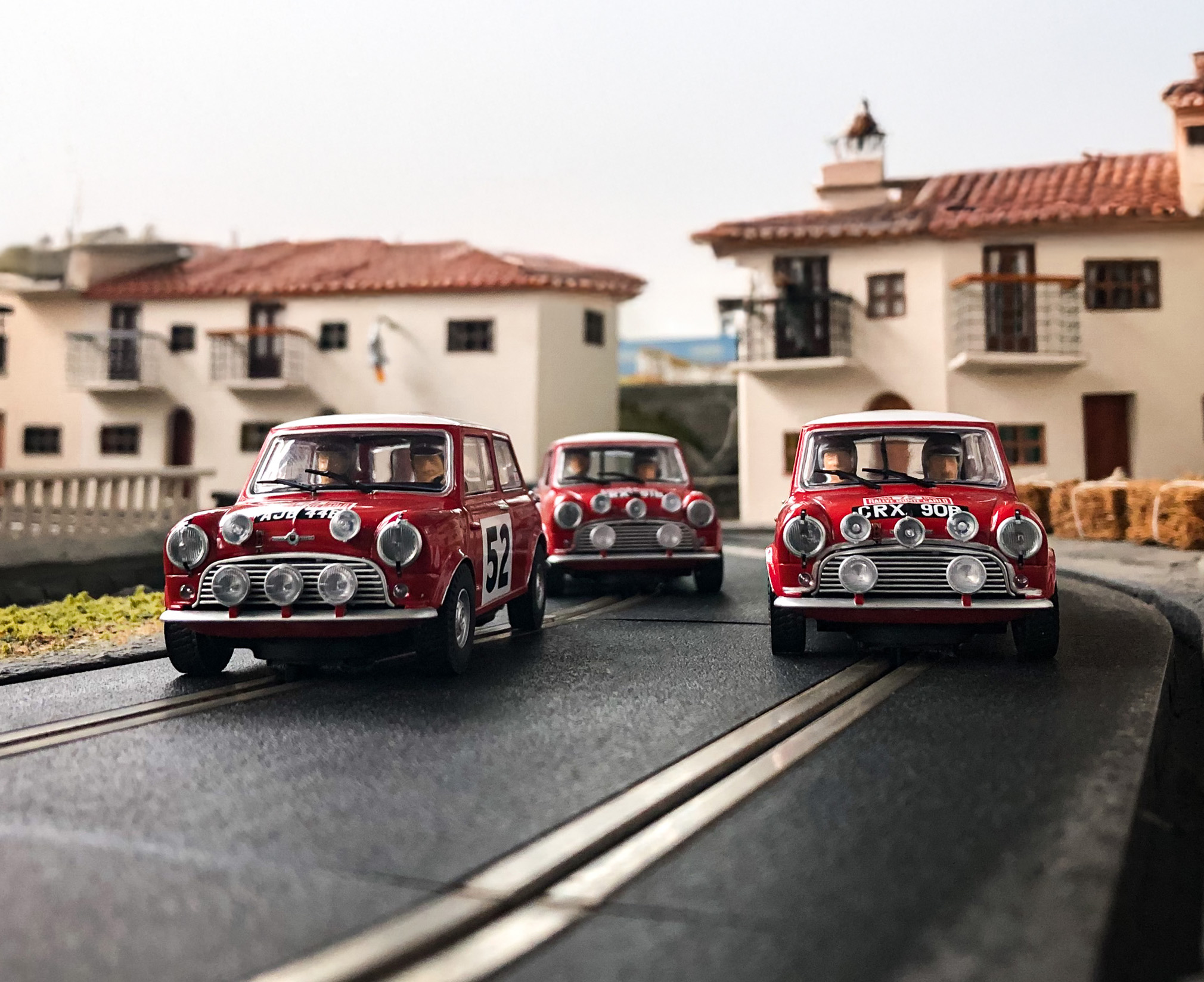
When the miniscule Mini, with its tartan red body and striking white roof entered the Monte Carlo Rally in 1964, nobody saw it as a real competitor. This small car was built for fuel-efficiency and space-saving, and its 90HP engine had nothing on the more powerful Mercedes Benz 300 SE and Ford Falcon.
But race teams dismissed the car too quickly, and this diminutive vehicle outshone all other cars in the competition, taking first place against all the odds.
In the 1964 event, six Mini Coopers took part, with three of them securing top ten positions. It was Paddy Hopkirk and Henry Liddon that clocked up the best cumulative time, in a surprise win, beating favourite Bo Ljungfeldt.
A year later and the Mini team were ready to defend their title, with larger engines, higher top speeds and faster acceleration to help them on their way. The course was already deliberately challenging with lots of twists, turns and tight corners, but it was even more difficult in 1965, due to extreme January conditions bringing levels of snow and ice few drivers had experienced before. Organisers also added a second night stage through the Maritime Alps, which added to the difficulty. In fact, of the 237 teams that started the rally, only 35 made it to the finish line.
Drawing on their expertise from the 1964 event, Mäkinen, Hopkirk and Morley were confident in the freezing conditions, with their small cars effortlessly navigating the narrow roads. This time though, it was Mäkinen who was crowned the winner, as the only driver to complete the race without picking up a single penalty point.
Hopkirk and Morley picked up 26th and 27th place respectively.
Team Mini were keen to pick up a hat trick but were disqualified from entering the event in 1966 due to using the wrong bulbs in their headlights. They soon rectified this issue, and once again proved their race-worthiness in the 1967 event.
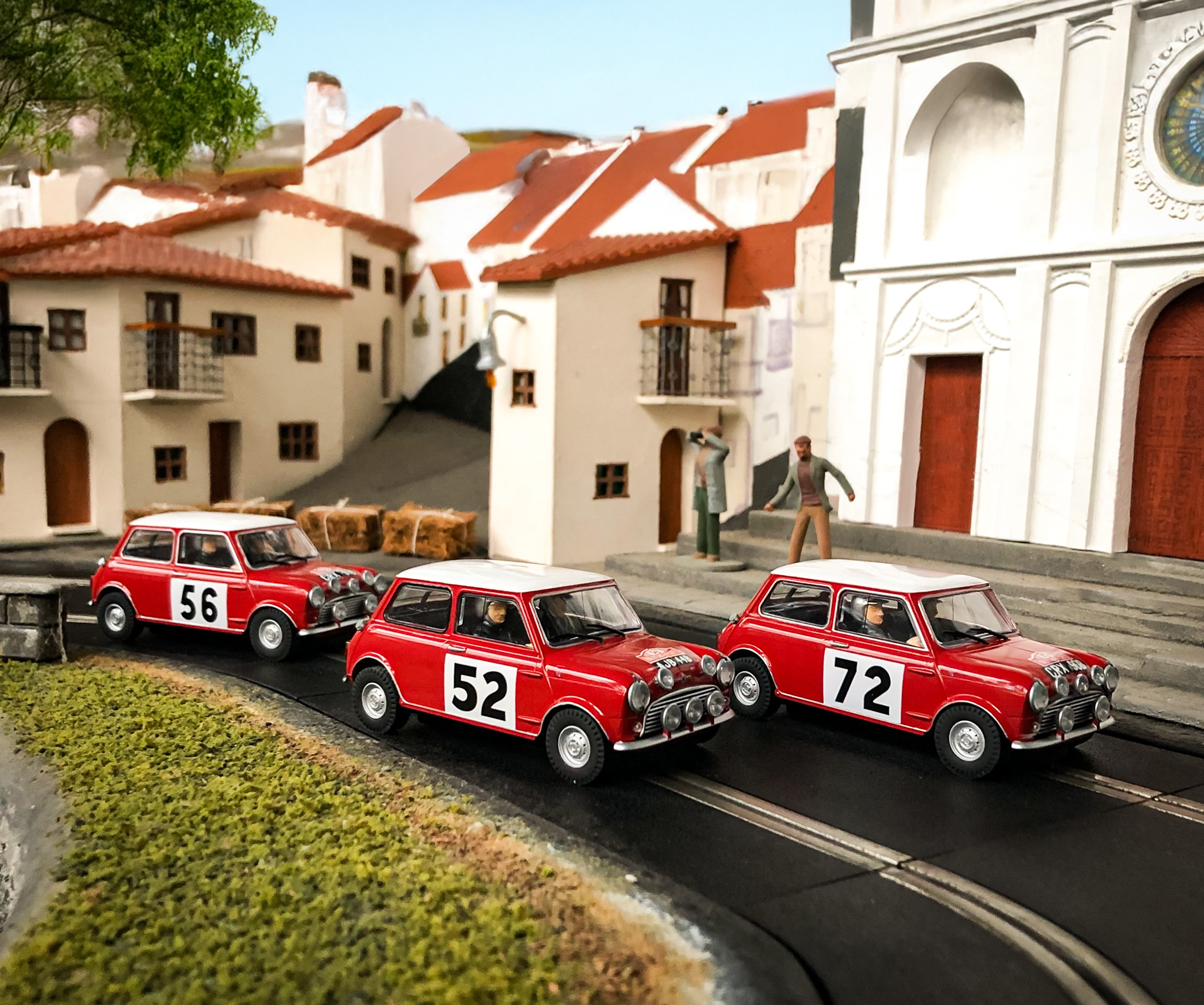
The original Mini, designed by Alec Issigonis in the late 1950s, was a small, fuel-efficient car inspired by the Beetle and created in response to the oil crisis in the UK at the time. John Cooper took this space-saving design, with its sideways engine, and turned it into a race-winning car.
With its front-wheel drive, low weight, wide track and long wheelbase, it was a speedy car that handled beautifully. Cooper gave it a four-cylinder engine that boosted its power, although it still paled in comparison to the Mercedes and Fords.
Its advantage came from the hillier sections of the Reims stage. Although the long straight roads allowed the cars to get up some serious speed, the Mini handled better on the downhills than its competitors. The Mini team had also practiced in the wintery conditions of the Silverstone circuit, so they were prepared for the snow and ice, and had the best tyres for these conditions.
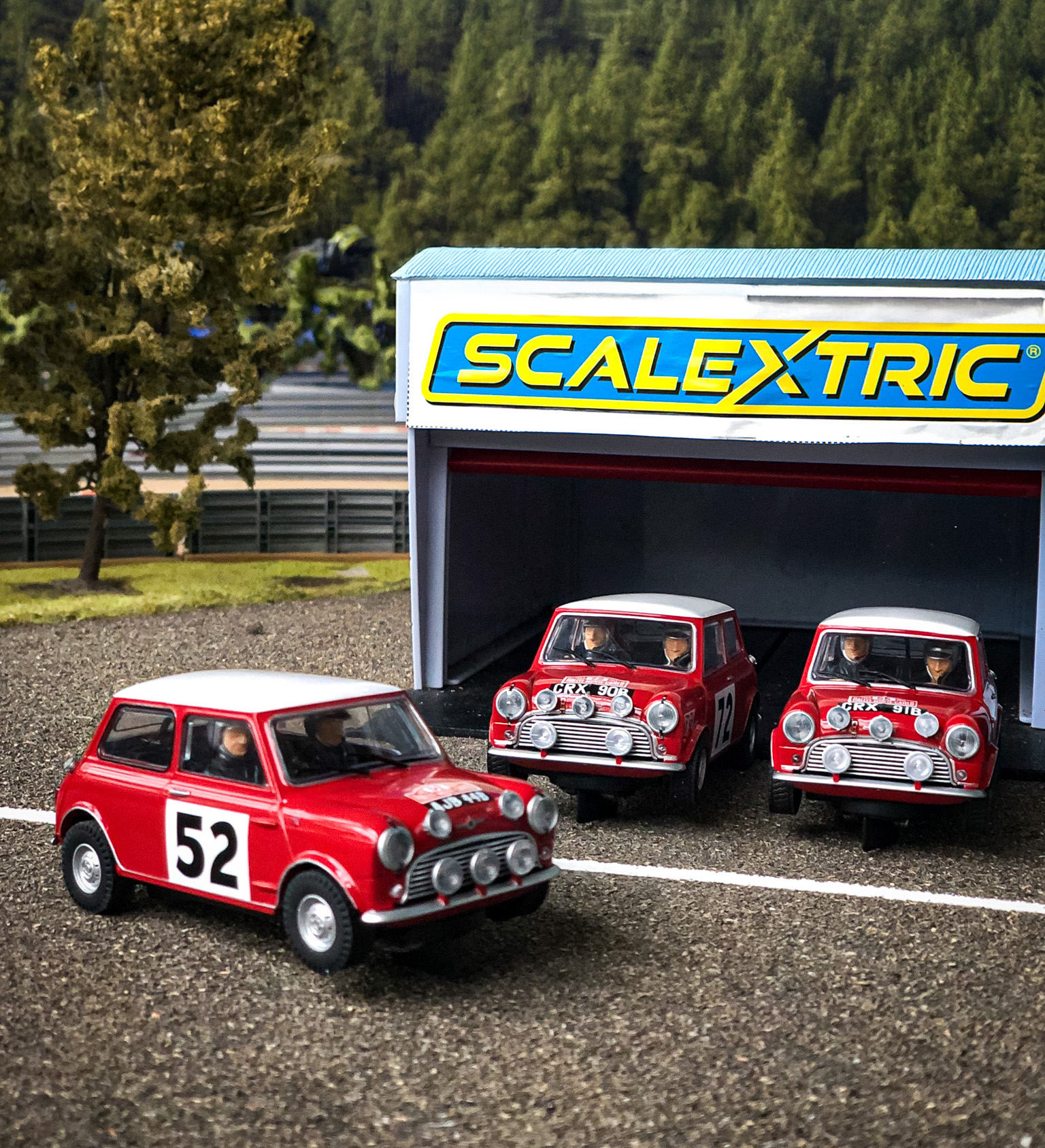
Now, we’re not recommending you recreate the whole 2,700-mile route in your home (although if you have the space, who are we to stop you?!), but you can still recapture some of the thrills and spills of the challenging rally. Use our long straights to build up speed and put in plenty of twists and turns to recreate the famous Col de Turini mountain pass.
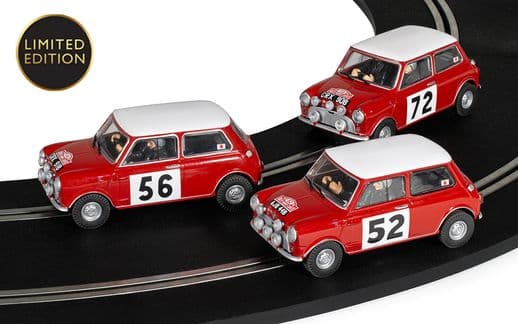
And, of course, finish your layout with the iconic 1965 Monte Carlo Rally Mini Triple Pack and put our speedy heroes to the test once again. Will Mäkinen’s #52 take first place again, or will his teammates take their turn at the top of the podium?